Capsule Wardrobe Essentials for Indian Summers: Dress With Less, Better
There is a particular kind of tiredness that comes from a full cupboard. You stand in front of it on a warm morning, already a little late, and nothing feels right. Too fussy, too tight, too much. The problem is rarely a shortage of clothes. It is a shortage of clothes that work together.
A capsule wardrobe answers that. It is a small, considered set of pieces, usually twelve to twenty, chosen so that almost everything pairs with almost everything else. For Indian summers, where heat and humidity edit your options before you do, a capsule is not a trend. It is common sense, dressed well.
- What a capsule wardrobe actually is
- Start with fabric, always
- The silhouette rule for hot weather
- The 12 pieces that carry a summer
- A colour palette that mixes itself
- Caring for a smaller wardrobe
- How to begin without buying everything
What a capsule wardrobe actually is
The idea is old and sensible: fewer garments, higher quality, more combinations. A working capsule means every top pairs with every bottom, every dress stands alone, and one or two layers carry you from morning errands to an evening out.
The quiet benefit is decision relief. Researchers who study choice overload, including work summarised by the American Psychological Association, keep finding the same thing: fewer, better options reduce fatigue and raise satisfaction. Your wardrobe is where you make your first decision of the day. It may as well be an easy one.
Start with fabric, always
In a 40-degree May or a sticky July, fabric is the difference between wearing clothes and enduring them. Build your capsule on fibres that breathe.
- Cotton: the workhorse. Absorbs moisture, softens with age, survives Indian laundry habits.
- Linen and cotton-linen blends: the coolest thing you can wear, in both senses. Creases are part of the charm.
- Handloom weaves: looser weaves mean better airflow, and each piece carries the small irregularities of the hand that made it.
What to leave out: anything with a high polyester count for daywear. It traps heat, holds odour, and looks tired within a season.
At Murkee we cut everything from breathable, premium fabrics for exactly this reason. It is the foundation the whole label rests on.
The silhouette rule for hot weather
Tight clothing works against you in summer. Fabric that sits on the skin blocks airflow, shows every crease of a long day, and simply feels heavier. Relaxed silhouettes, cuts that fall away from the body, keep a layer of moving air between you and the weather.
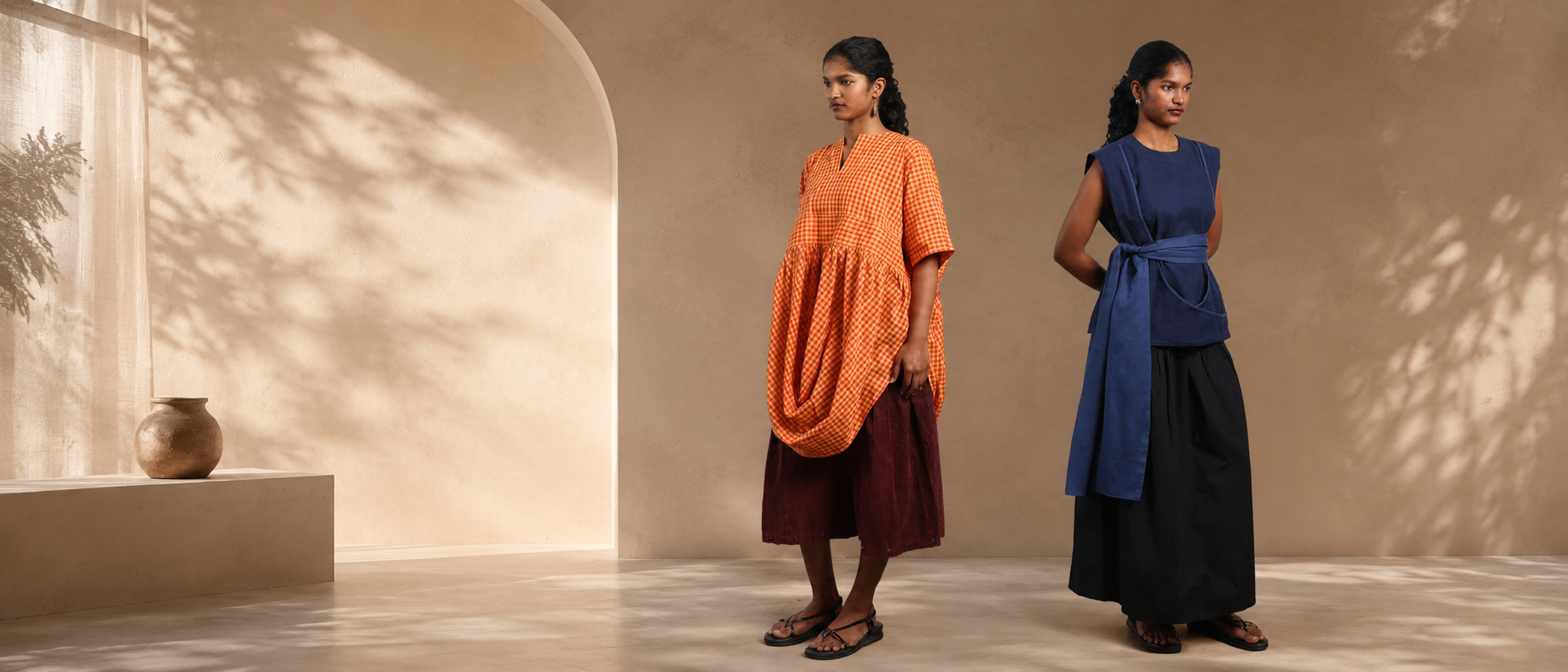
Think shift dresses that skim rather than cling, wide-leg pants that move as you walk, and kaftans that turn the hottest afternoon into something manageable. Ease is not the absence of shape. A well-cut relaxed piece is drafted more carefully than a tight one, because the drape has to do all the work.
The 12 pieces that carry a summer
Here is a capsule built for Indian heat, drawn from shapes we return to again and again.
- A shift dress in a breathable weave, the one-step outfit. The Shiftline Dress is our blueprint.
- A second dress with more presence for dinners and gatherings, like the Saanjh Dress.
- A kaftan, the most honest hot-weather garment ever designed. The Firefly Kaftan earns its keep from April to September.
- Two relaxed shirts you can wear closed, open over a slip, or knotted. The Kinara Shirt and Neer Shirt were made for this rotation.
- Two easy tops in quiet colours, one collared, one not. The Tide Top and Fern Top cover both moods.
- One pair of wide, fluid pants. The Ghoom Pants move like a skirt and work like trousers.
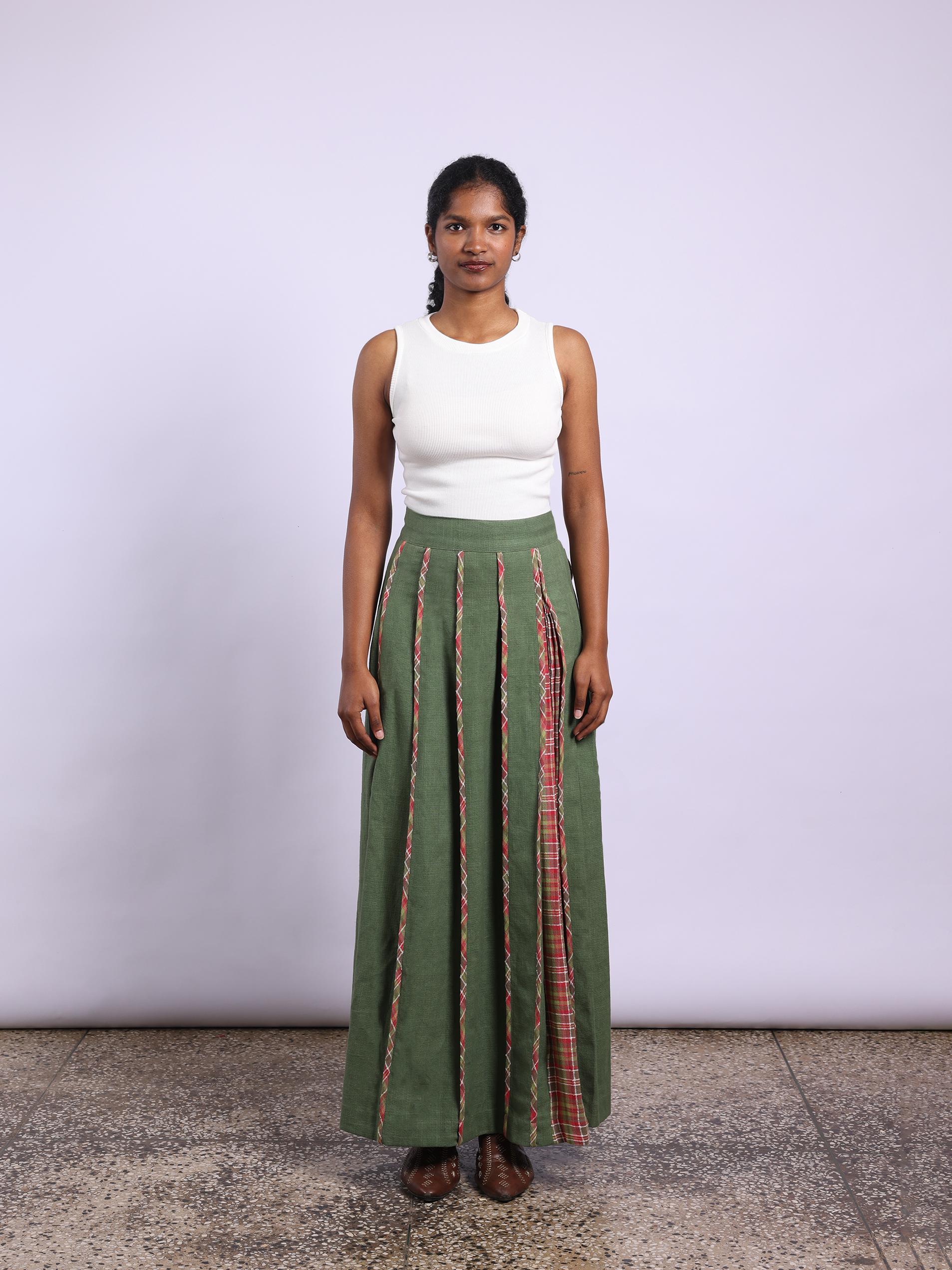
- Two skirts with walkable ease, one flowing, one structured. The Lehar Skirt and Soha Skirt sit on either side of that line.
- One layering piece for over-air-conditioned rooms, a light overshirt or an open weave wrap.
- One festive-adjacent piece that dresses up with jewellery and down with sandals.
Count the combinations and twelve garments quietly become a month of outfits.
 The Lehar Skirt: flowing ease that anchors half the outfits in this capsule.
A colour palette that mixes itself
A capsule works when colours agree without effort. Choose a base of two neutrals you actually wear, ivory, sand, soft white or deep brown, then add three or four muted tones that flatter you: clay, moss, indigo, faded rose.
The test for any new piece is simple: does it pair with at least three things you already own? If the answer is no, it is a costume, not a wardrobe member. Prints earn their place when the ground colour belongs to your palette.
Caring for a smaller wardrobe
Fewer clothes means each piece works harder, so care matters more.
- Wash cottons and linens cold, inside out, and skip the dryer. Line-dry in shade so colours keep their depth.
- Iron linen slightly damp, or embrace the crease and steam lightly.
- Rest garments a day between wears. Fibres recover, and everything lasts longer.
- Store with space. Crowded cupboards crease clothes and hide half of what you own, which is how overbuying starts.
How to begin without buying everything
Do not throw out your cupboard on a Sunday afternoon. Start by pulling out the ten pieces you already reach for most. Notice their fabrics, their ease, their colours. That is your palette talking. Then fill the gaps slowly, one well-made piece at a time, chosen because it multiplies your outfits rather than adds to the pile.
A capsule wardrobe is not a restriction. It is an invitation to dress with simplicity and intention, which has been the point of Murkee from the first sketch.
Begin where the rotation starts: our bestsellers, the pieces that have already earned a place in hundreds of smaller, better wardrobes.
Styling notes, fabric stories and new pieces, written the way we design: slowly and with intention.
Explore the Collection